Lyft
Reinventing the payment and ride matching experience to build a safer and more inclusive environment
A quarter-long product management and design consulting project between Lyft and Northwestern CASE, advised by a Product Manager at Lyft
Role
Lead UX Designer
UX Research
Product Management
Timeline
10 weeks
2021
Tools
Figma
Miro
Adobe Photoshop
Team
Northwestern CASE (Consultants Advising Student Enterprises) – Project Managers, Marketing Team, Design Team
The Problem
How can we improve the ride payment experience to increase brand loyalty amongst college students?
There are currently around 20 million college students in the U.S., many of who do not own cars on campus but require mobility. With this in mind, we decided the university would be a big opportunity for Lyft and set out to conduct research to better understand how college students interact with rideshare apps and redesign the payments process to make it more inclusive and increase brand loyalty.
UX Research
675
College students surveyed
30
1:1 interviews with current students
We set out to conduct user research, with questions across a variety of topics, including demographics, behavior, and motivations, as well as Lyft’s brand perception to help us better understand our users’ emotions and needs. A Qualtrics survey was completed by 675 college students across the United States, of which 330 responded they have used the Lyft app. We then conducted 30-minute 1:1 virtual interviews with 30 students, with a demo detailing the payments process of a prototype that recreated the Lyft app from scratch.

Survey Insights &
Market Segementation
The surveys comprised of questions focusing on payment methods and transportation options, and the data revealed several pain points and 2 common use cases.
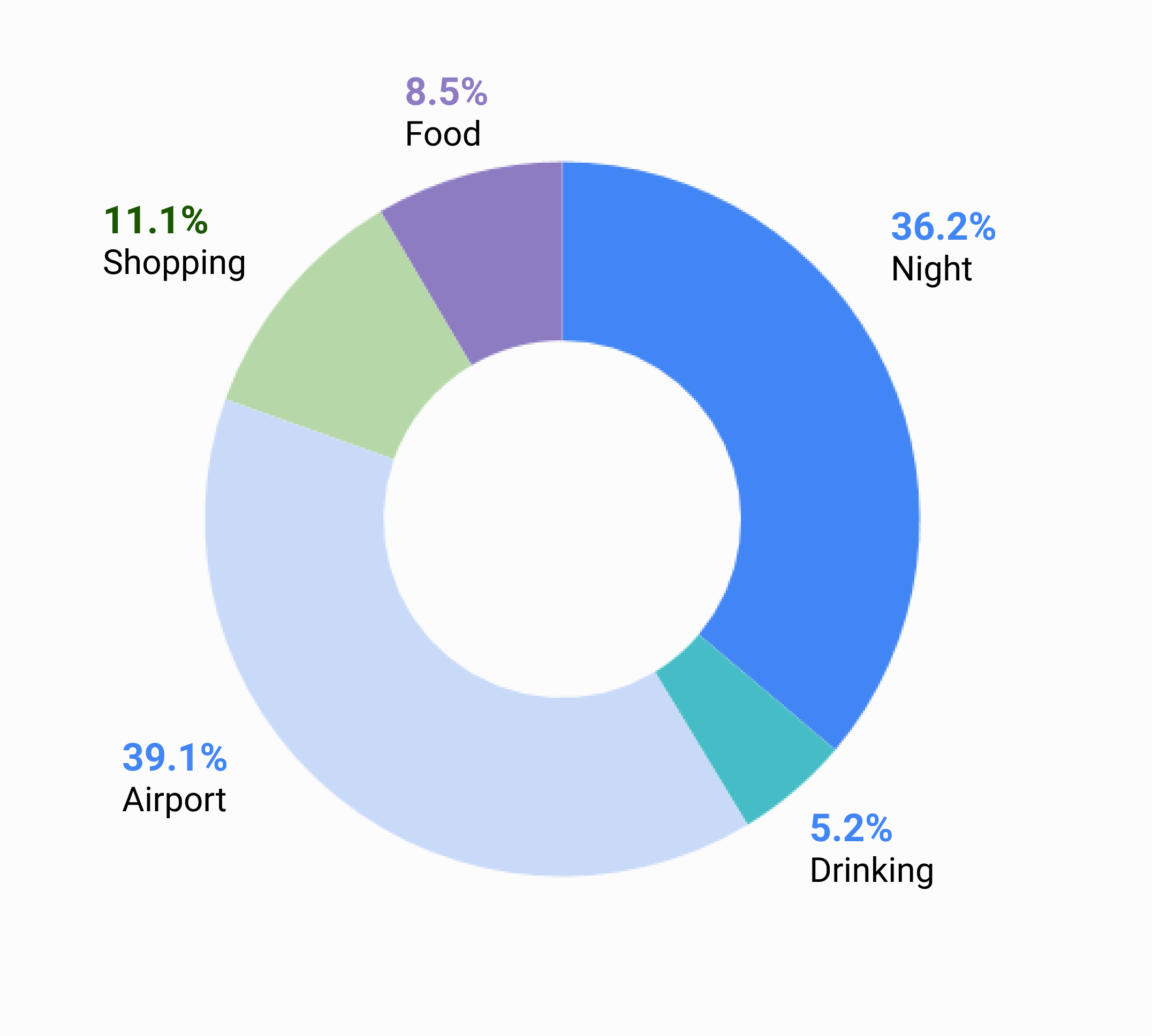
Airport Rides
39.1%
of out-of-state students use airport travel as the main reason for rideshare use, 6x more than in-state students.
Night Rides
Overall, 19.68% of students use rideshare specifically for night rides, and 16.39% in the <$50k bracket use rideshare for night rides, compared to 22.43% in the $150k< bracket.
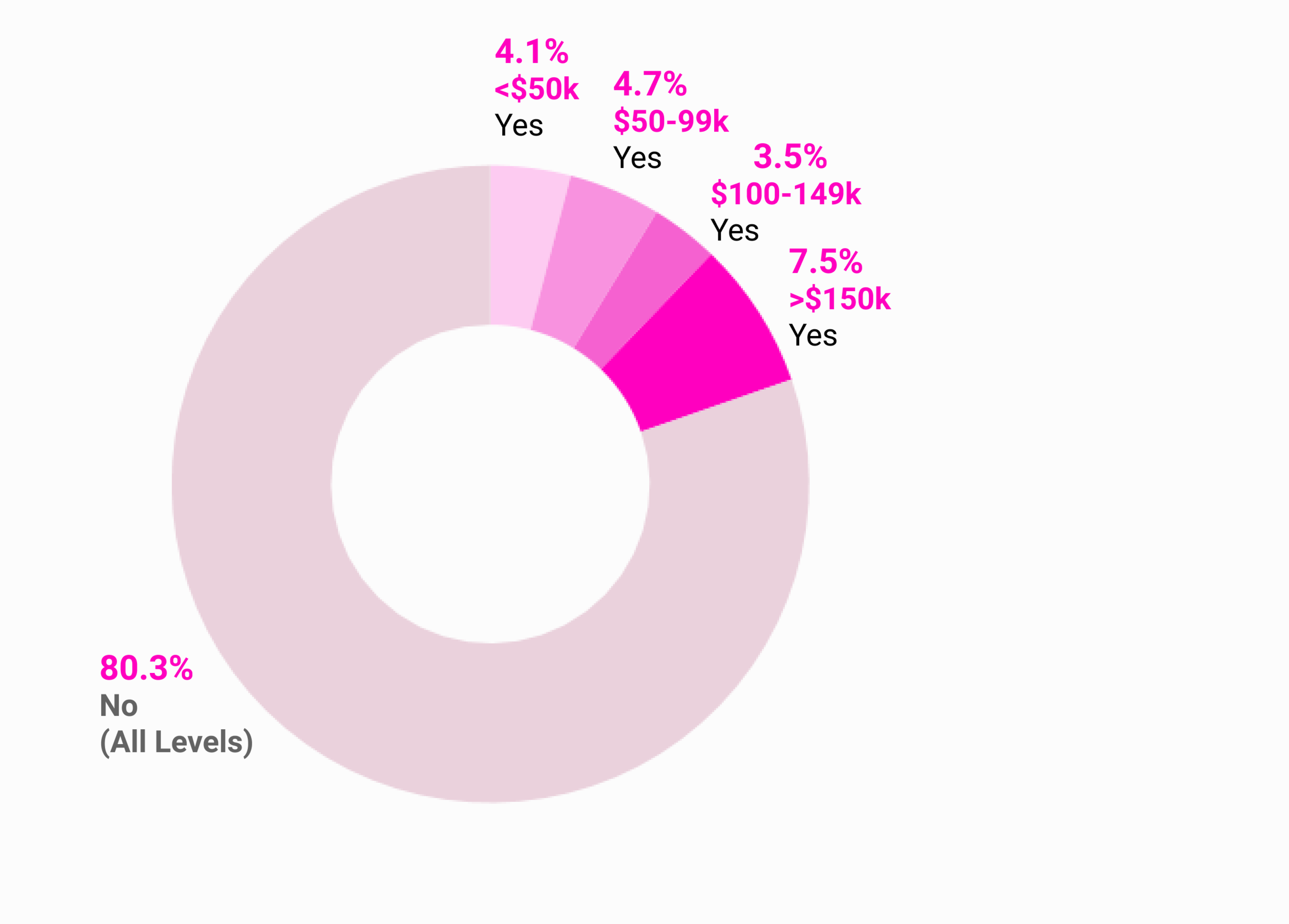

Out-of-State vs In-State
4.34 vs 3.72 Rides
Out-of-State vs In-state average rides per month
➟ Out-of-state students generally have less access to personal transportation.
Payment Methods
Credit Cards
more often used by higher income levels
Debit Cards
more often used by lower income levels
➟ Overall, Venmo usage is similar across all levels, and students rarely connect their bank accounts to rideshare apps.

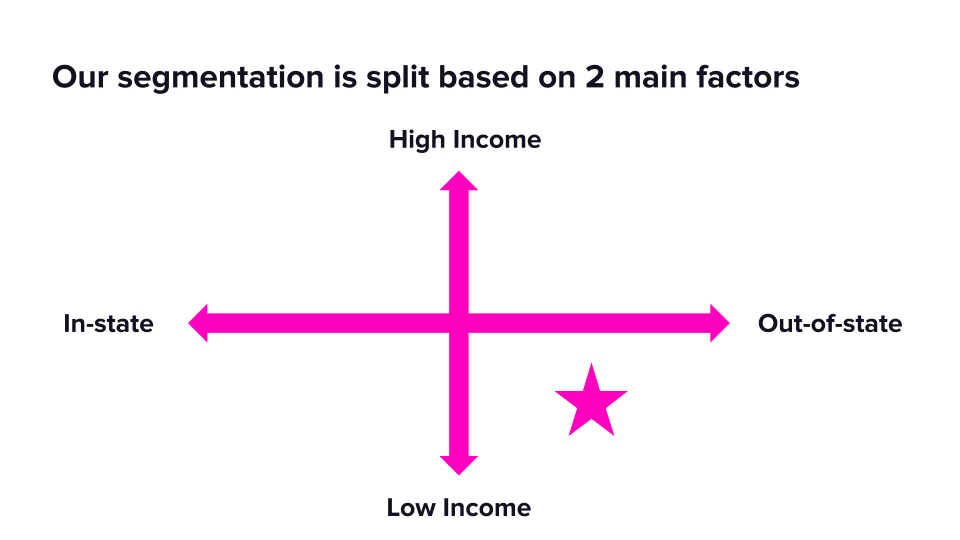
We decided to shift our target audience towards the out-of-state and low-income student bracket based on the data from our UX research, as there was a clear need for improved features in shared rides to incentivize them and allow them to have better access to ridesharing.
Personas
Repositioning Our Goals
As we conducted our interviews, we decided to shift our target problem and users. Many college students had noted that a single Shared ride from airports and other crowded locations is prohibitively expensive, but a Classic ride split by 3-4 riders was more affordable. In addition, a staggering 24.7% of college riders in our survey were low-income, with 15% indicating they could not afford both Shared or Classic rides.
While riders are willing to share rides with their peers, they lack information about the ride. Students are more willing to share rides with others compared to random riders especially late at night and to/from the airport. Rides to/from airports generally take much longer due to multiple stops and pickups, and Lyft often loses out on potential customers who cannot afford a Lyft ride alone and struggle to find other to split with.
After analyzing the data, we repositioned our problem statement and designed solutions aimed to increase Lyft’s prominence and brand loyalty among college students and make Lyft more accessible to low-income riders, building and solidifying a long-term relationships with them on Lyft.
How might we improve the ride matching and payment experience to increase brand loyalty amongst college students, make ridesharing more accessible to low-income students, and create a safer environment?
Key Takeaways
01. It’s difficult to find groups to split rides with
02. Students desire to split ride fares easily
03. Need for transparency on tipping & charging
We proposed solutions that would target these main pain points, matching riders, specifically students, in their near vicinity with a shared destination to address lower supply of drivers while making rides more affordable. We hypothesize this will increase low-income ridership, retain supply (drivers), and reduce frequency of redundant trips for drivers.
01.
University Group Ride Matching
Students want to split expensive rides to the airport and other far locations especially when out late, but have trouble finding others to split rides with.
“I plan my flight date and time around my friend’s flights in order to be able to split the cost of the rideshare back to campus.”
– 👩🏻🎓 Current Northwestern University Junior
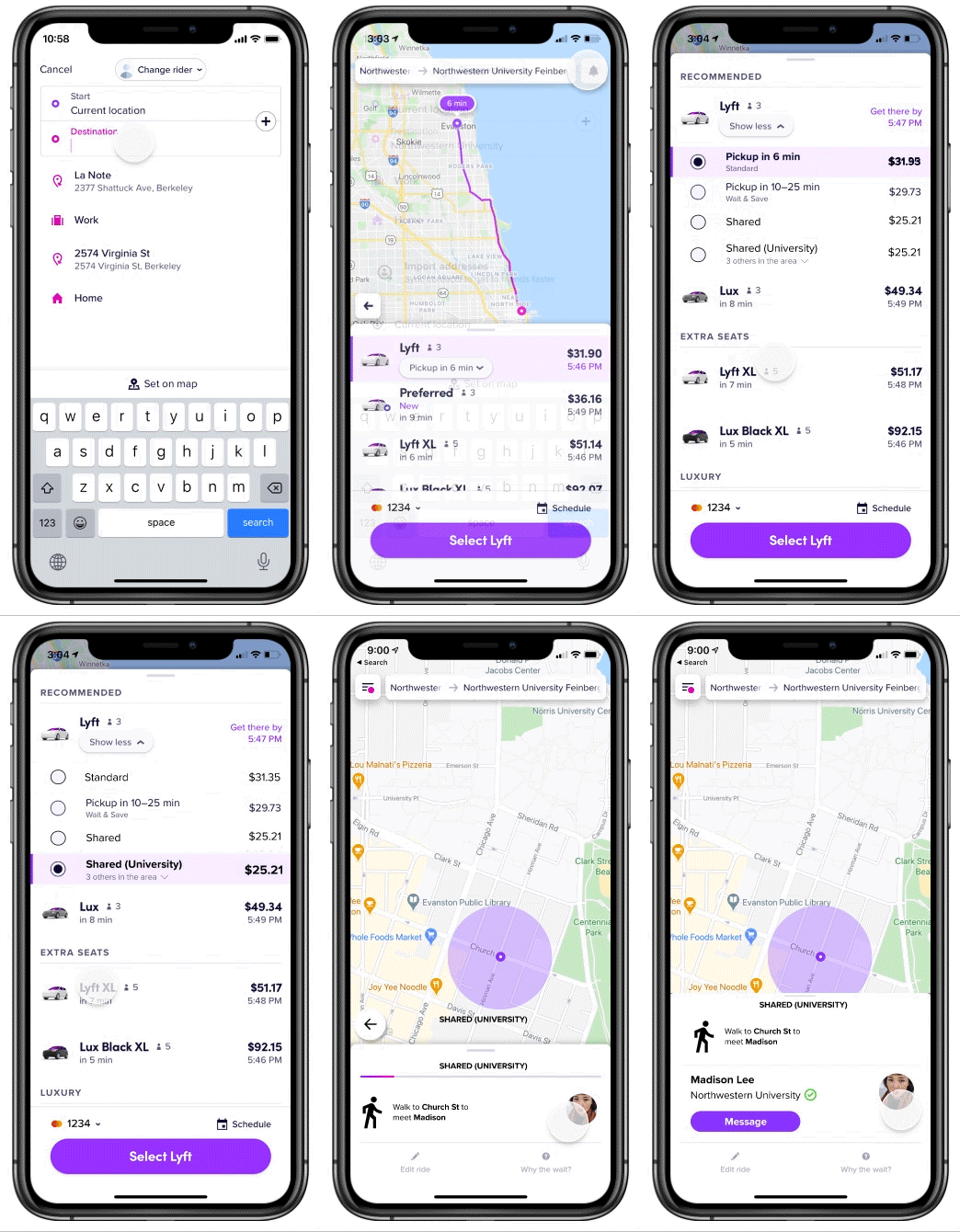
Our Solution
We built a new feature that allows students to select a Shared University Ride to be connected with other students from their university. Students would get verified via their university (.edu) email, giving the users more ease being matched with a fellow university student.
After being matched, they would walk to a nearby location to be picked up at the same time, minimizing extra time for multiple pickups and sharing a common destination.
Redesigned flow and UI for verifying university enrollment status
Redesigned flow and UI for University Ride Matching
02.
Create Shared Ride Groups to Easily Split Fares
Many users we interviewed had similar frustrations regarding sharing rides with friends but not being paid back, a burden especially to low-income students. Students often split payments outside of rideshare apps using other methods such as Venmo or Zelle. This scenario is often tedious and the user who calls the ride often is waiting on Venmo payments from the other riders.
To make this process more streamlined, we introduced the Shared Ride Group feature, which utilizes QR codes or a unique link to split the cost of a rideshare without having to use an external app to do the calculating and charging.
“I wish the app had an easy way to split payments because I’m always Venmo requesting people to pay me after calling the ride, and sometimes they do not pay me back which is frustrating.”
– 👨🏼🎓 Current UC Berkeley Sophomore
“If there was an easy in-app feature to split payments, it would definitely save the hassle of splitting payments outside of the ridesharing app.”
– 🧑🏽🎓 Current UChicago Senior
Shared Ride Group Feature UI & New User Flow
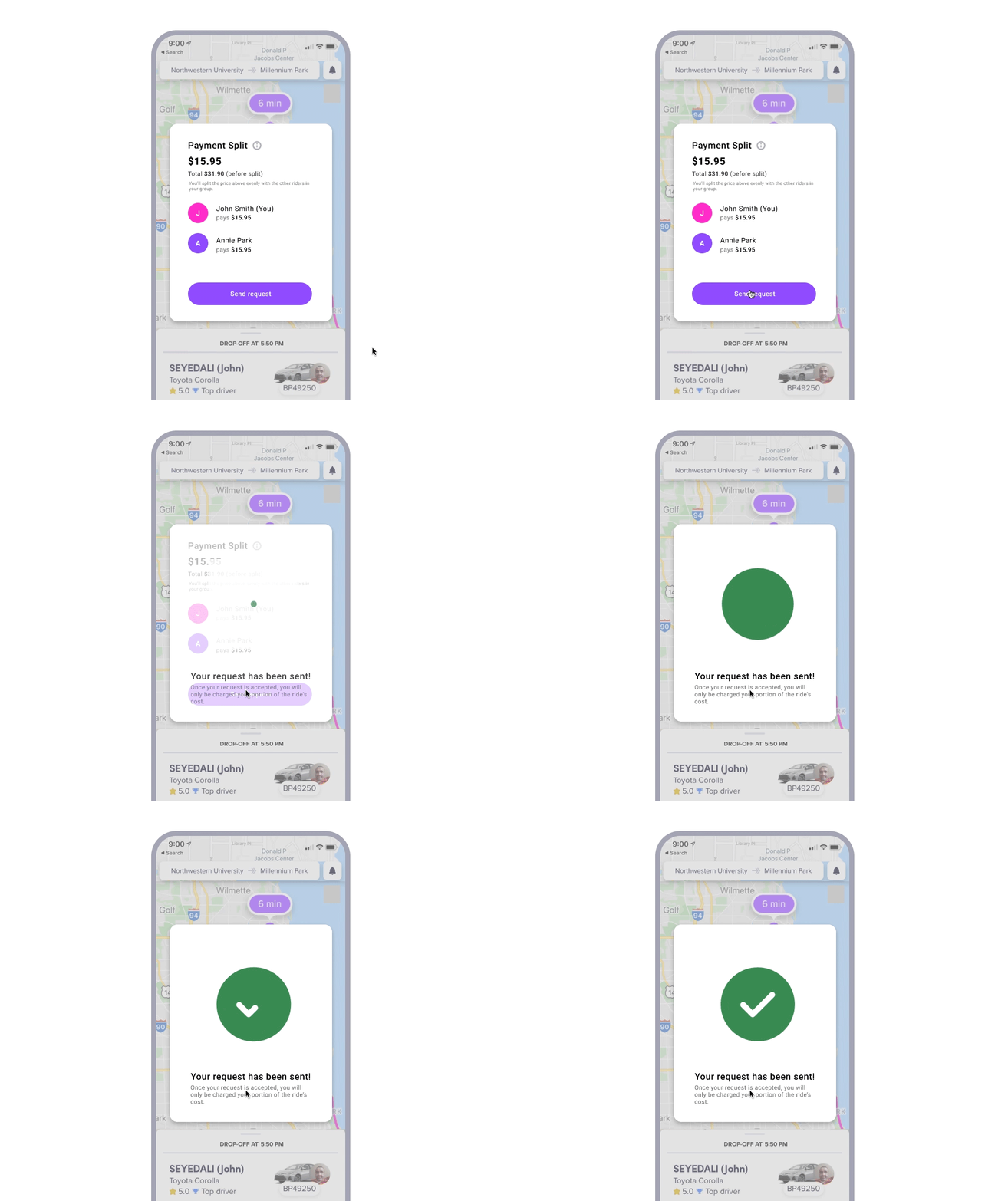
Split & Request Payments
Having the ability to create a ridesharing group within the app would allow riders to keep a history of who they rode with and streamline the cost-splitting process, which minimizes the risk of not being paid back.
03.
Transparency in Tipping & Charging
Many users had mentioned they would like to see a percentage instead of a dollar amount, so we combined both! Some riders may have been willing to pay more tip, but the options provided were much lower, and adding a custom tip would have been tedious. Students in particular want to tip their drivers, but have uncertainties in how much of the ride costs or tip actually goes towards their driver, so we set out to make this process more transparent.
Final Thoughts
In addition to anticipating what the user needs through UX research and new designs, we also mapped out, detailed, and prioritized product requirements (PRD), conducted market analysis, and crafted a go-to market strategy and rollout plan.
By conducting research and evaluating usability, we were able to make suggestions for new changes. To measure the success of our redesigned features, we will look to see if there is an increase in number of rides from public spaces to university campuses, retention rates, and a decrease in ETA and detours for shared rides. In addition, we will push these new features through push notifications, referrals discounts, and student ambassador programs, and from our analysis, we estimate that there will be more than 200,000+ new riders and $20M added revenue!
Still have questions about our project? Check out our PRD, UX Research, or contact me to chat!