The Ambidesk
Role
Human-Centered Product Design,
Design Research, Prototyping, Research, Ideation, Laser Cutting
Timeline
3 months (10 weeks)
Spring 2018
Tools
Adobe InDesign
Illustrator
Photoshop
Team
Joanna Li
Conor McGeehan
Sean Goldman
William Jeang
Deliverables
Final Prototype, Final Presentation, Low-fidelity prototypes, Weekly progress presentations
The Problem
Lecture hall desk and chair combinations are currently not the proper size or shape for students’ needs. They do not fit all the supplies students need on a daily basis and do not provide enough space to take notes and tests properly. They also do not allow for others to navigate past easily without causing disruption.
Research
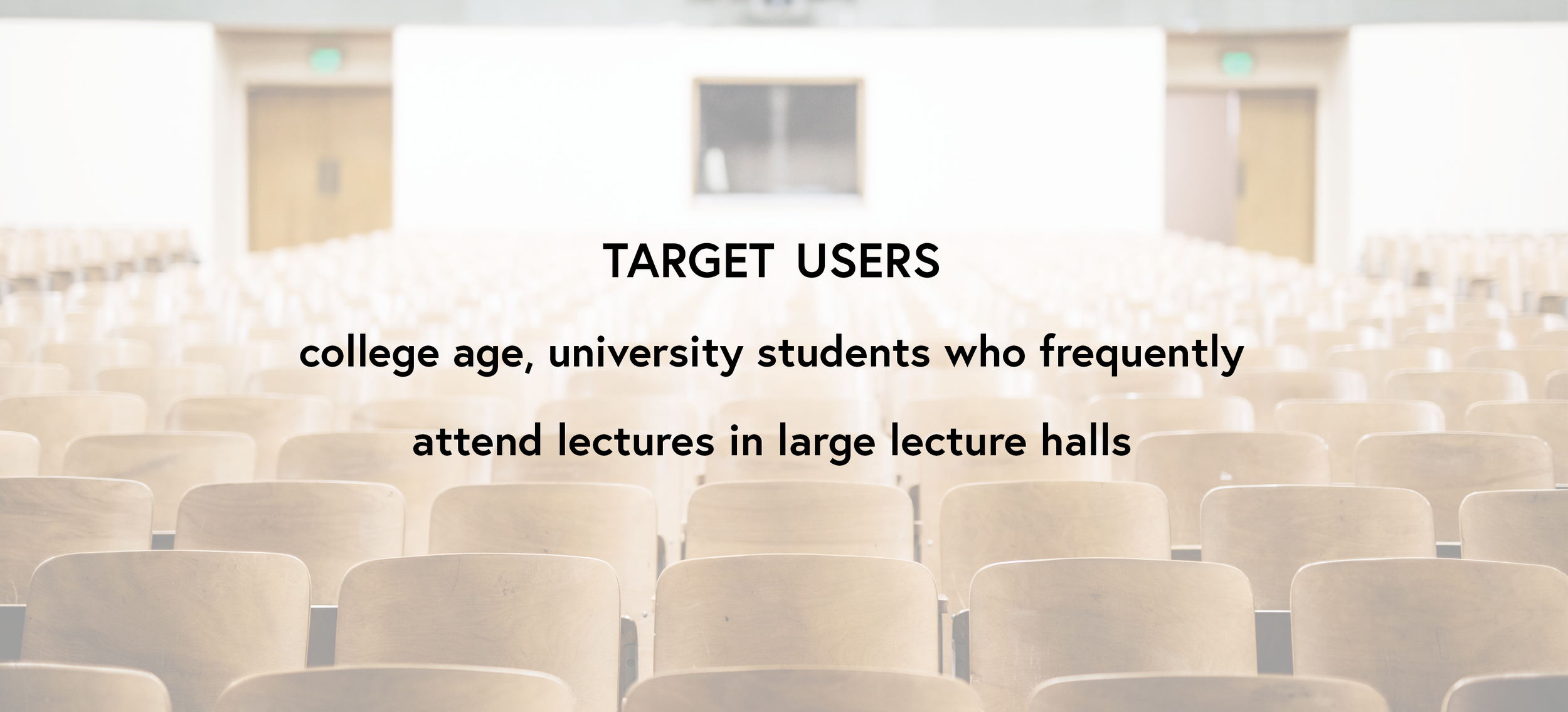
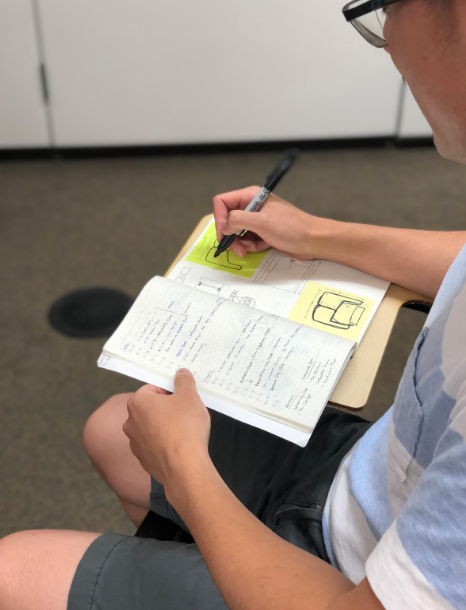
We interviewed 70 students at Northwestern University, asking them about their satisfaction levels for various lecture halls on campus through preliminary interviews. We sat in on lectures in different halls to observe students utilizing the desks in order to understand current existing campus lecture halls. This also helped us analyze our problem areas, create a target audience, and begin our initial concept ideation.
Ideation
Some ideation questions we worked through include:
• How might we conserve space in lecture halls to provide as much seating as possible?
• How might we make the desks suitable for both right and left handers?
• How might we take inspiration from current lecture hall desks at Northwestern?
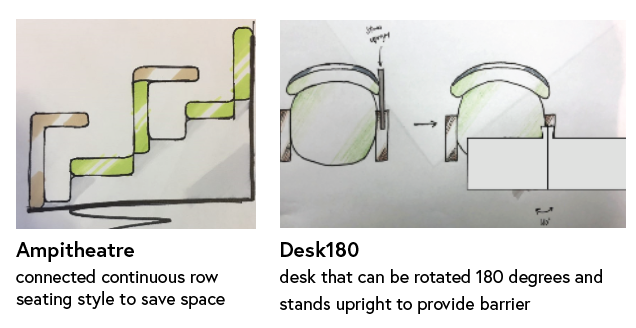
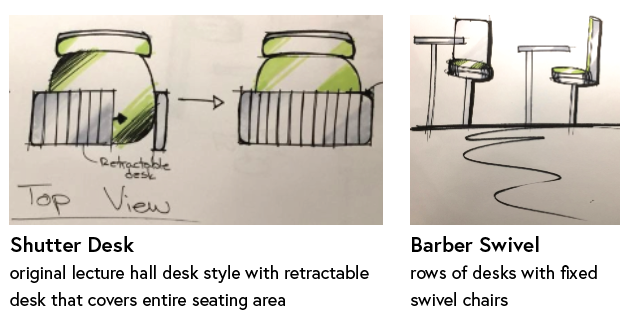
The Solution
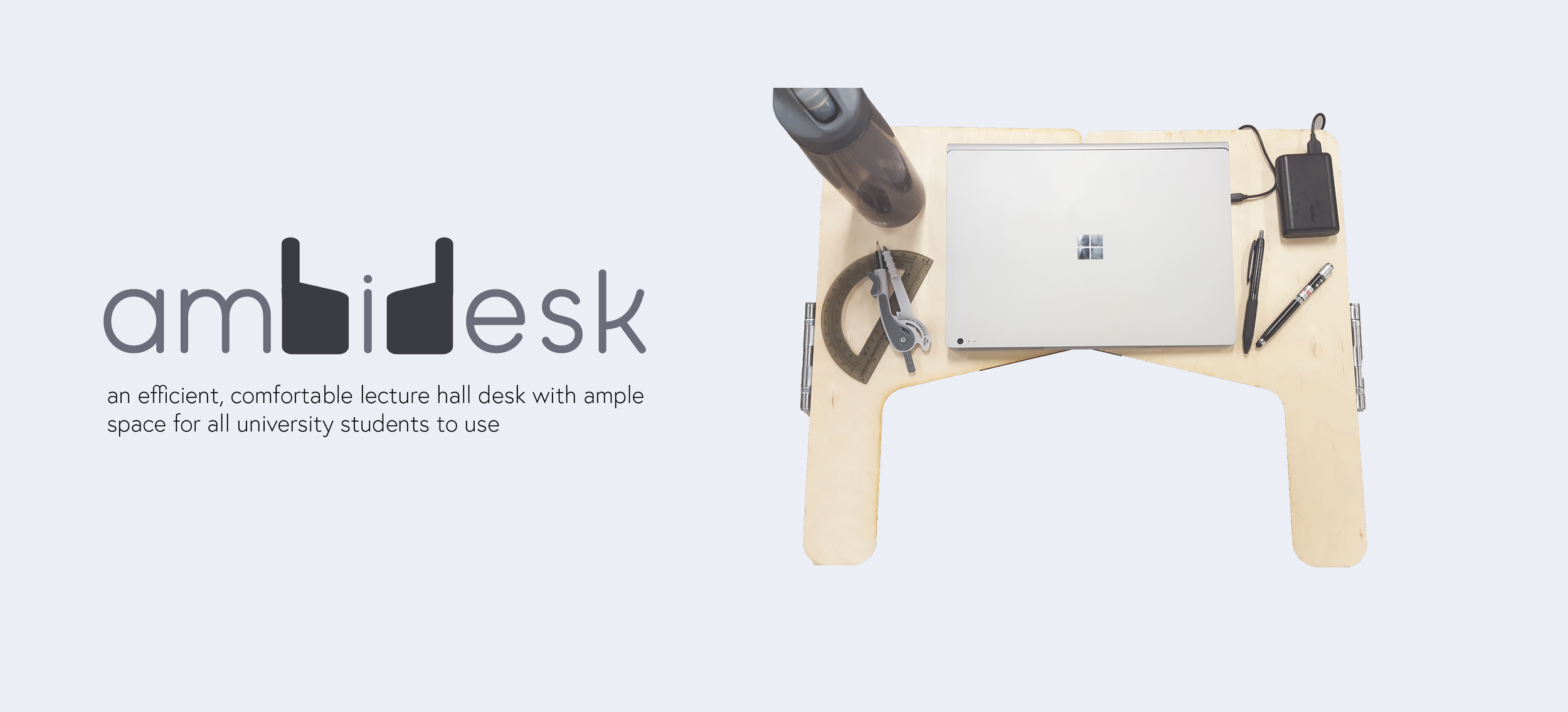
An efficient, comfortable lecture hall desk with ample space for all students to use in any lecture hall.
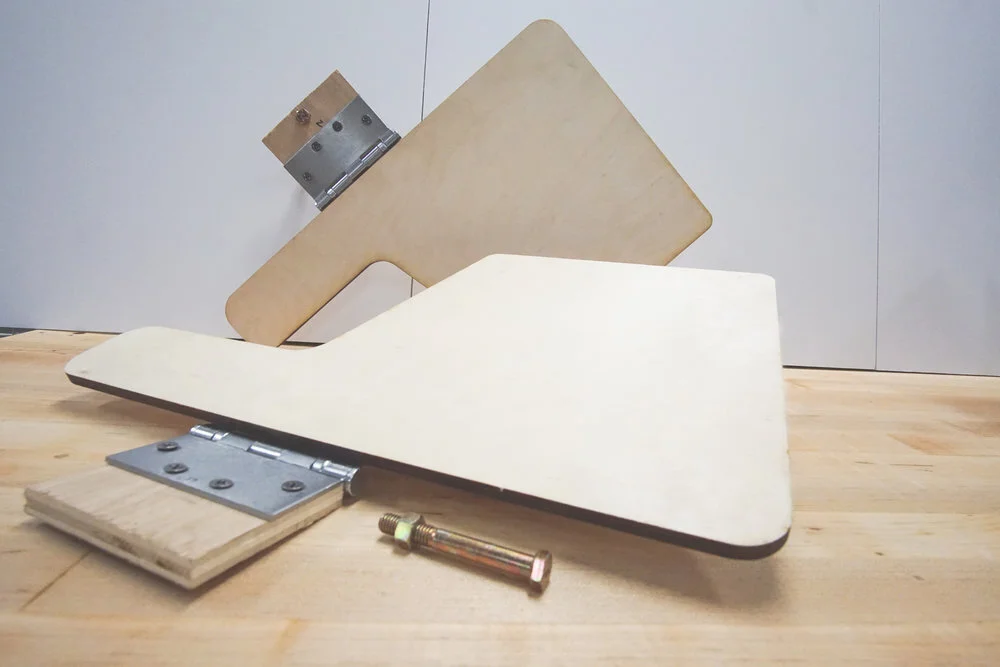
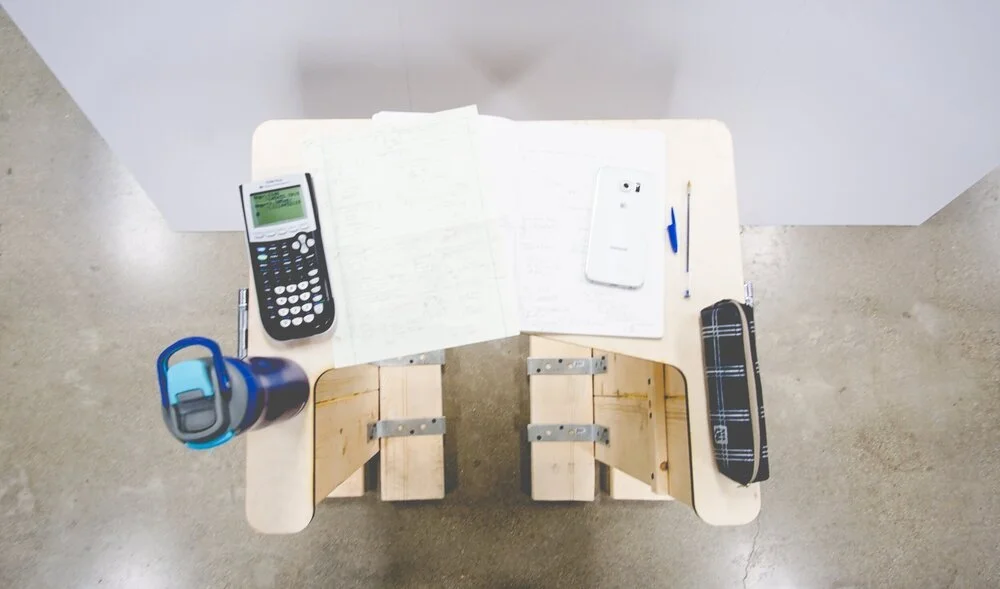
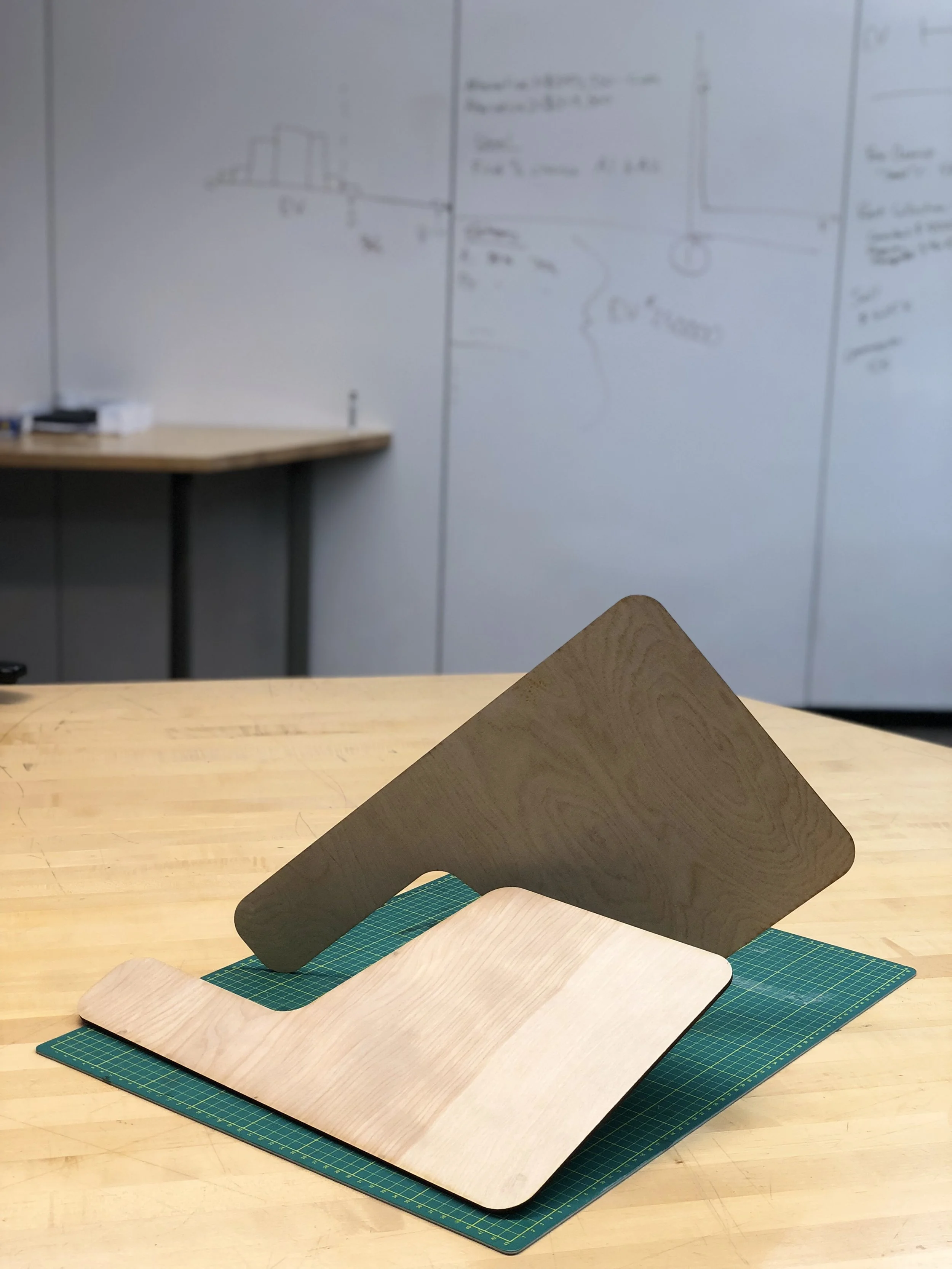
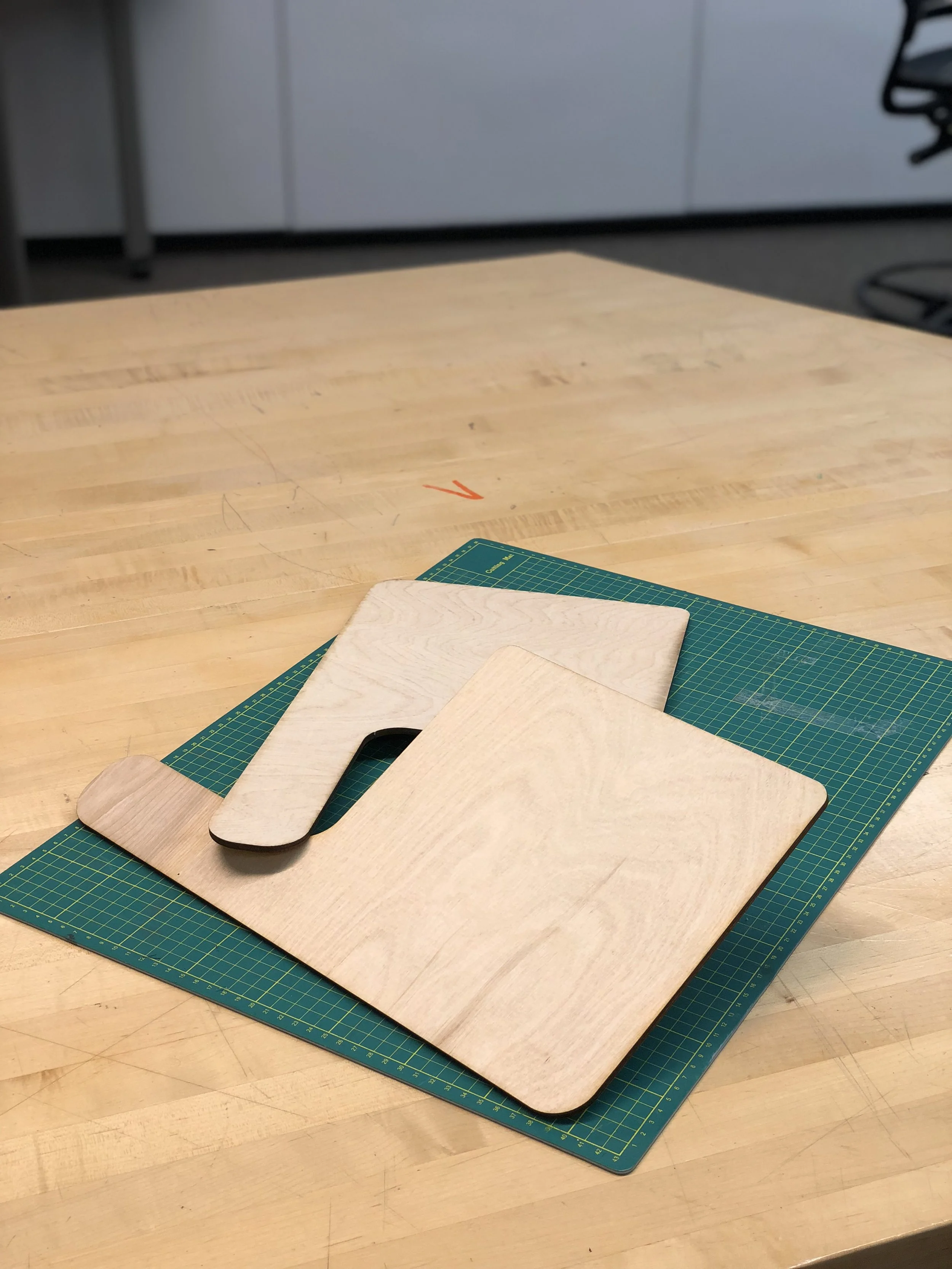
The Ambidesk consists of two half-desks that fit together and are navigable, providing more desk space than current solutions at a competitive price.
Conducted 3 rounds of user testing
1ST ROUND – We surveyed 75 students at Northwestern in-person and through an online survey to gauge student satisfaction with current lecture halls on campus.
What we learned: a majority of students were unsatisfied with current lecture hall desks, with 32 out of 75 students ranking current desks at a 2.
Do you have enough desk space in lecture halls?
2ND ROUND – We surveyed 30 students with an online survey with our concept sketches to see which one they preferred the most. We also created foamcore prototypes of each ideation and asked 10 students in person to test the concepts out and surveyed their satisfaction.
Which concept do you prefer the most?
3RD ROUND – With our laser-cut wood prototypes of the Ambidesk, we surveyed 26 students in person to test the size and determine the ideal distance between the chair back and center of desk to achieve highest comfortability for the user. We determined that the ideal distance between the chair back and the back of the desk would be 16.02 inches.
We also compared our laser-cut wood prototypes to current lecture hall desks and found improvements such as:
• Reshaping
• Making desk wider since the prototypes couldn’t quite connect at the middle
• Making desk longer since a half desk couldn’t fit a standard 8.5 x 11 sheet of paper comfortably
• Utilizing thicker wood material
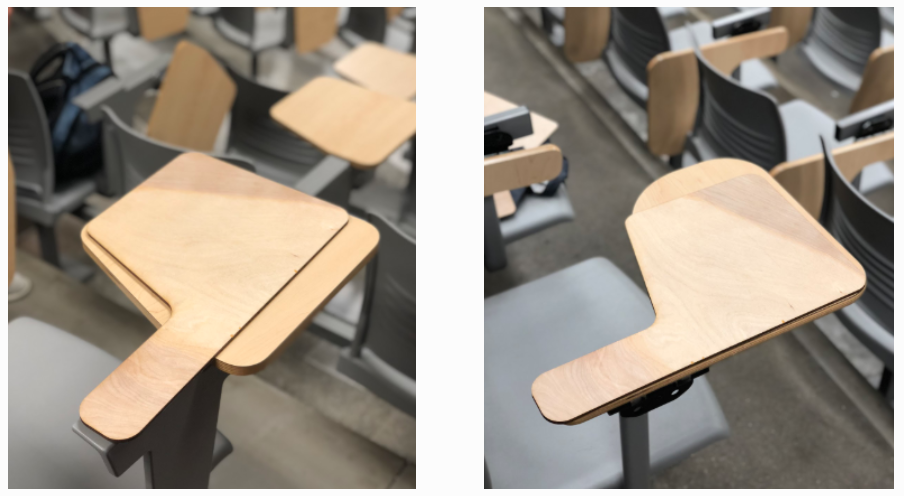
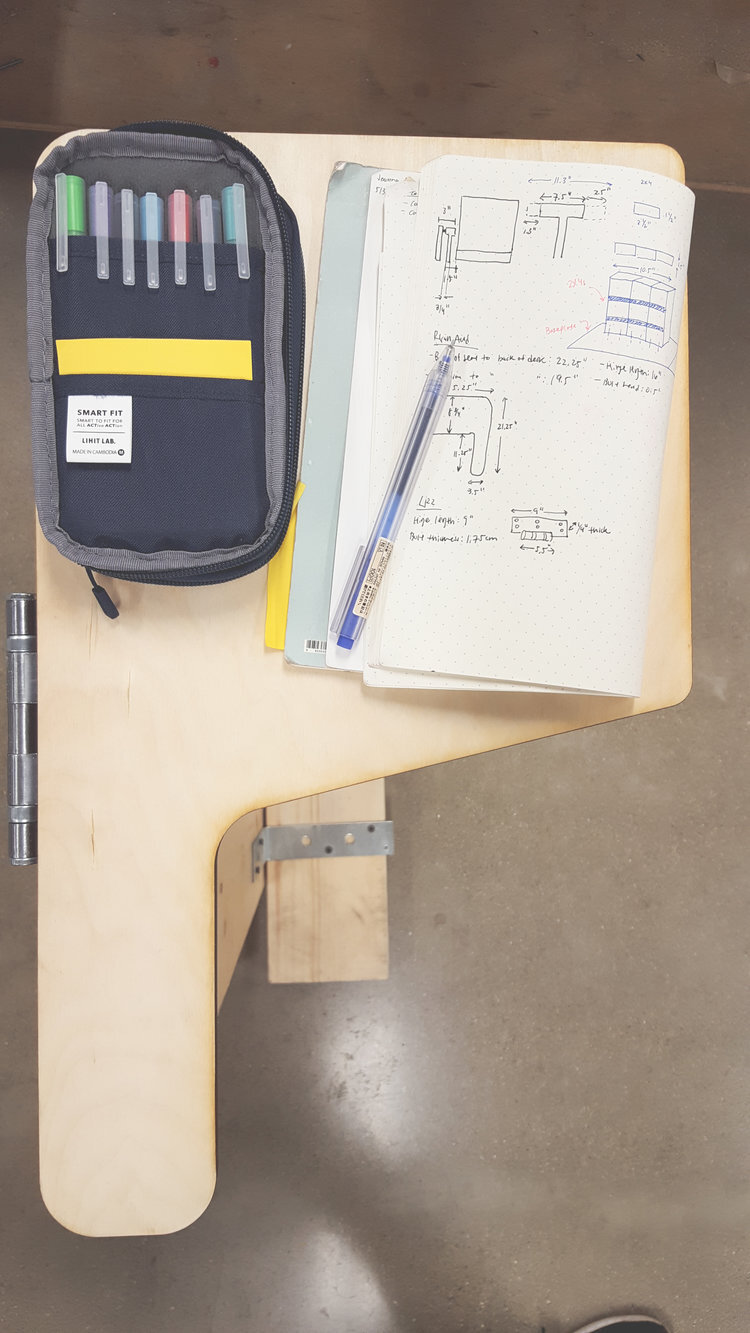
Prototyped two versions of Ambidesk
• Created two different mock-ups of our design with slightly different shapes
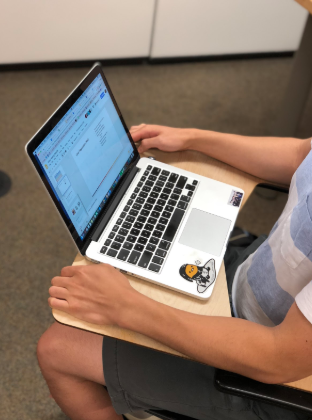
• Fits a standard notebook and 13" laptop
• Laser-cut wood
Version 2
Version 1
Performance Testing
We tested the deflection of current lecture hall desks around campus to calculate the ideal deflection for the Ambidesk.
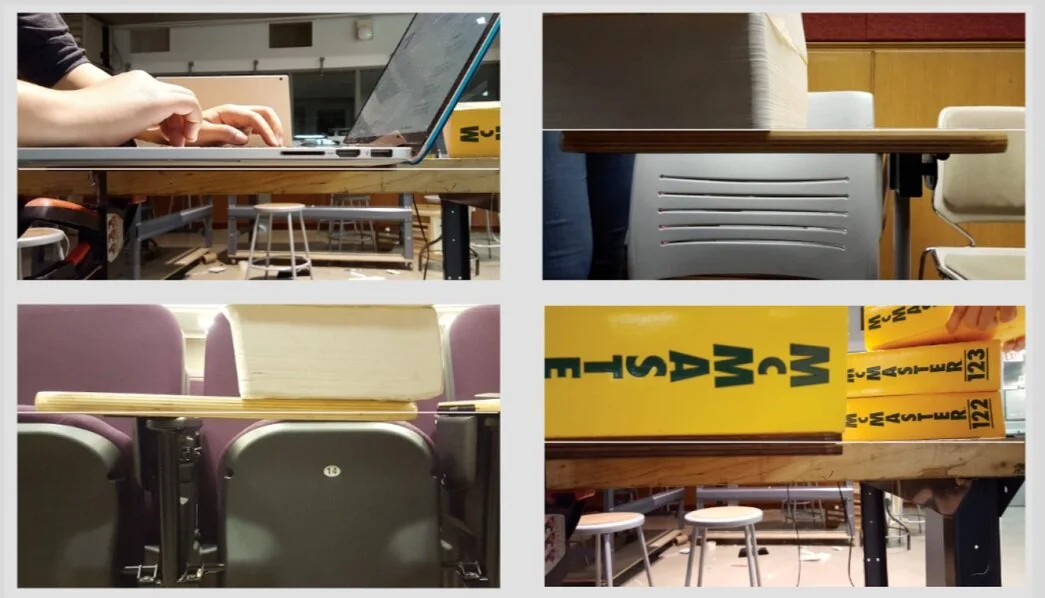
Structural Stability Calculations
Chose deflection of 7.5 lb because average weight of a laptop is around 5 lbs (want safety factor of 1.5 lb)
Identify simple engineering strategies for increasing structural stability of the desk
Deflection is inversely proportional to wood thickness, h, cubed, had cubic relationship to the length of the lever arm, L
P – applied load; E – Young’s Modulus of material
Increasing thickness of desk and decreasing length of lever arm will result in tremendous decrease in deflection for given load
Decrease in lever arm length can be achieved without decreasing desk size by including metal support bar near hinge to increase size of the cantilever support
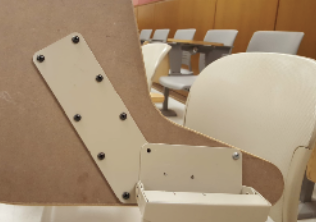

Desk Materials Selection
Baltic Birch Plywood
• High perceived quality compared to plastic or composites
• Warmer touch compared to metals (thermal conductivity)
• Selected based on scientific but also user-centered parameters
• Aesthetics
Final Prototype
The desk is able to fit a variety of items students use on a daily basis during lectures, including a laptop, smartphone, battery pack, water bottle, notebook, pens, and pencil case.